
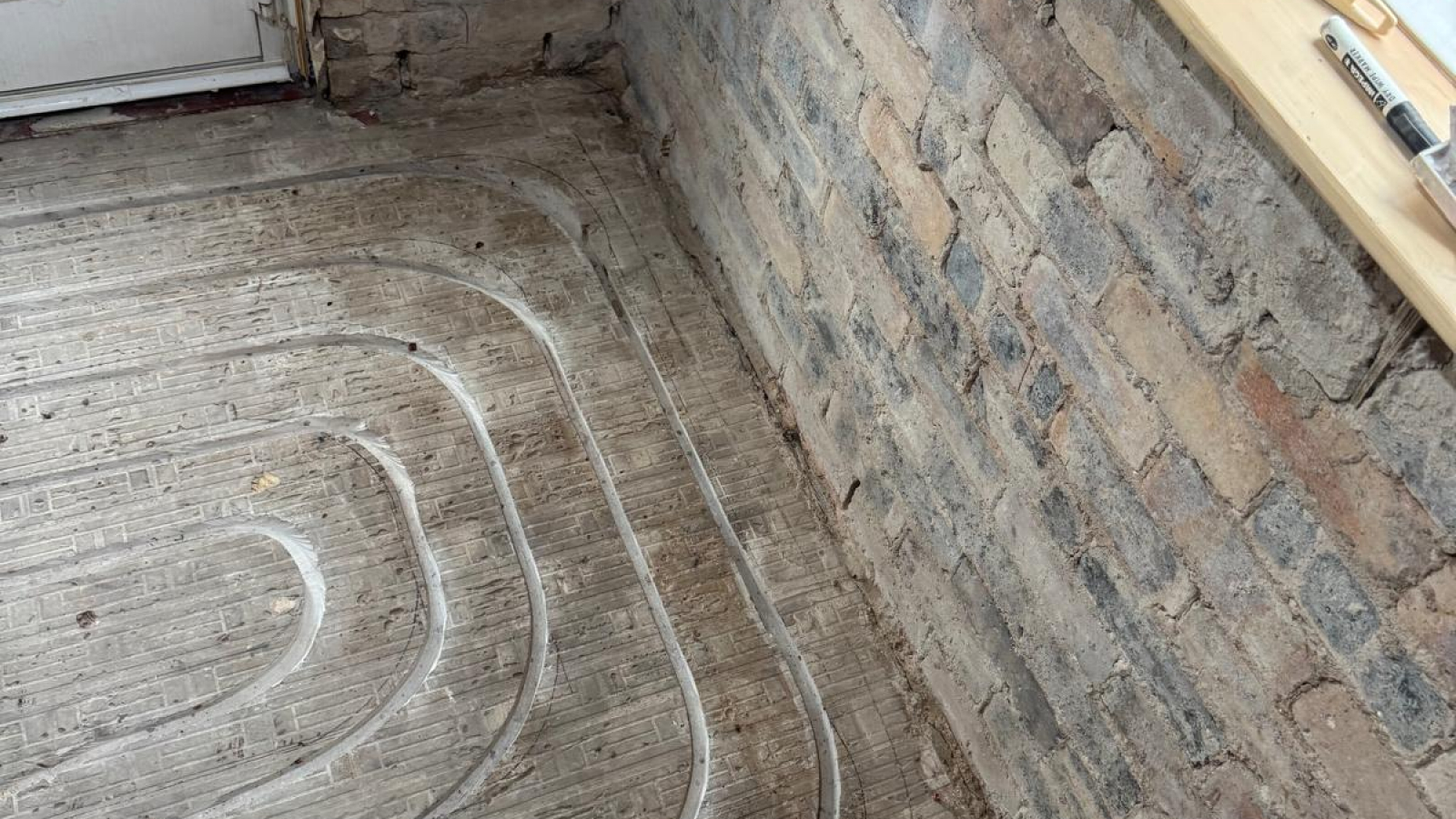
Retrofit underfloor heating is still unfamiliar to many homeowners, especially when it’s installed into existing concrete floors using milling rather than traditional overlays. Below, we answer the most common questions we hear from clients considering this type of installation
Can underfloor heating be installed in an existing house?
Yes – underfloor heating can be professionally retrofitted into many existing homes, including properties with concrete or screed floors.
Modern installation techniques, such as precision floor milling, allow water underfloor heating pipework to be installed directly into the existing slab. This avoids the need for removing floors or building up new layers on top, making underfloor heating a realistic option during renovations and upgrades.
Will installing underfloor heating cause major disruption?
This is one of the biggest concerns homeowners have, and in most retrofit projects, disruption is far less than expected.
With a milled system:
- The existing floor remains in place
- No additional screed layers are required
- Floor heights are unchanged
- There are no long drying times
The milling process is controlled and targeted, and most installations are completed within a short timeframe, often fitting neatly into renovation schedules or phased works.
Does underfloor heating work without an overlay or screed?
Yes. Underfloor heating does not rely on an overlay to function properly.
When pipes are installed directly into the concrete slab, they sit closer to the finished floor surface. This short heat path allows warmth to transfer efficiently into the room, often resulting in faster response times compared to deeper, traditional build-ups.
The existing concrete also acts as a stable thermal mass, distributing heat evenly across the space.
What if my home isn’t well insulated?
Insulation always affects heating efficiency, but a home does not need to be perfectly insulated for underfloor heating to work.
In many UK properties, insulation levels are modest, especially in older homes. A milled underfloor heating system can still perform effectively when correctly designed, using appropriate pipe spacing, flow temperatures and controls based on the property’s actual heat loss.
Improving insulation will always enhance efficiency, but the absence of perfect insulation does not automatically rule out underfloor heating.
Is underfloor heating expensive to run?
Running costs depend on the heat source, insulation levels and how the system is used, not just the heating type.
Water underfloor heating operates at lower temperatures than radiators, which can improve efficiency, particularly when paired with heat pumps or modern condensing boilers. Many homeowners see reduced running costs due to even heat distribution and lower flow temperatures. You can read more about this topic here.
A proper system design is essential to achieve this.
Can underfloor heating work alongside my existing radiators?
Yes. Underfloor heating is often installed as part of a hybrid system.
It can serve selected rooms or zones while radiators remain elsewhere in the property. The two systems are managed using appropriate controls and mixing arrangements to ensure efficient operation.
This approach allows homeowners to upgrade gradually rather than replacing everything at once.
Is milling safe for my concrete floor?
When carried out professionally, floor milling is safe and carefully controlled.
Before installation, the slab is assessed for depth, condition and suitability. Channels are cut to precise depths and patterns, ensuring the structural integrity of the floor is maintained while allowing accurate pipe placement.
This is a specialist process and should always be carried out by experienced installers.
How long does a retrofit underfloor heating installation take?
Installation times vary depending on the size and layout of the project, but many retrofit installations are completed quickly compared to traditional methods.
Because there is no screed drying time, the floor can often be prepared for final finishes shortly after installation, helping to keep renovation timelines on track.
How do I know if my home is suitable?
Every property is different. Floor construction, heat loss, ceiling heights and heating systems all play a role in determining suitability.
That’s why a professional assessment is the most reliable way to understand whether retrofit underfloor heating is the right solution for your home.
Book a free underfloor heating assessment
If you’re considering underfloor heating in an existing property and want clear, honest advice based on your home, not assumptions, our team can help.
We’ll assess your floor, heating system and renovation plans, and explain the options available to you.
Book your free, no-obligation underfloor heating assessment today.